
The rapid development of online casino platforms has transformed user expectations. Players no longer look merely for accessible games; they expect immersive, dynamic, and interactive environments. As competition among platforms intensifies, the quality of the interface becomes a decisive factor. Modern operators increasingly rely on gamification strategies—borrowing mechanics from video games—to enhance engagement and prolong user sessions.
By blending intuitive design with psychological motivators, casinos create ecosystems that feel less like transactional gambling spaces and more like interactive entertainment platforms. This shift is crucial for attracting new audiences and building long-term loyalty among existing players.
Gamification as a Core UX Strategy
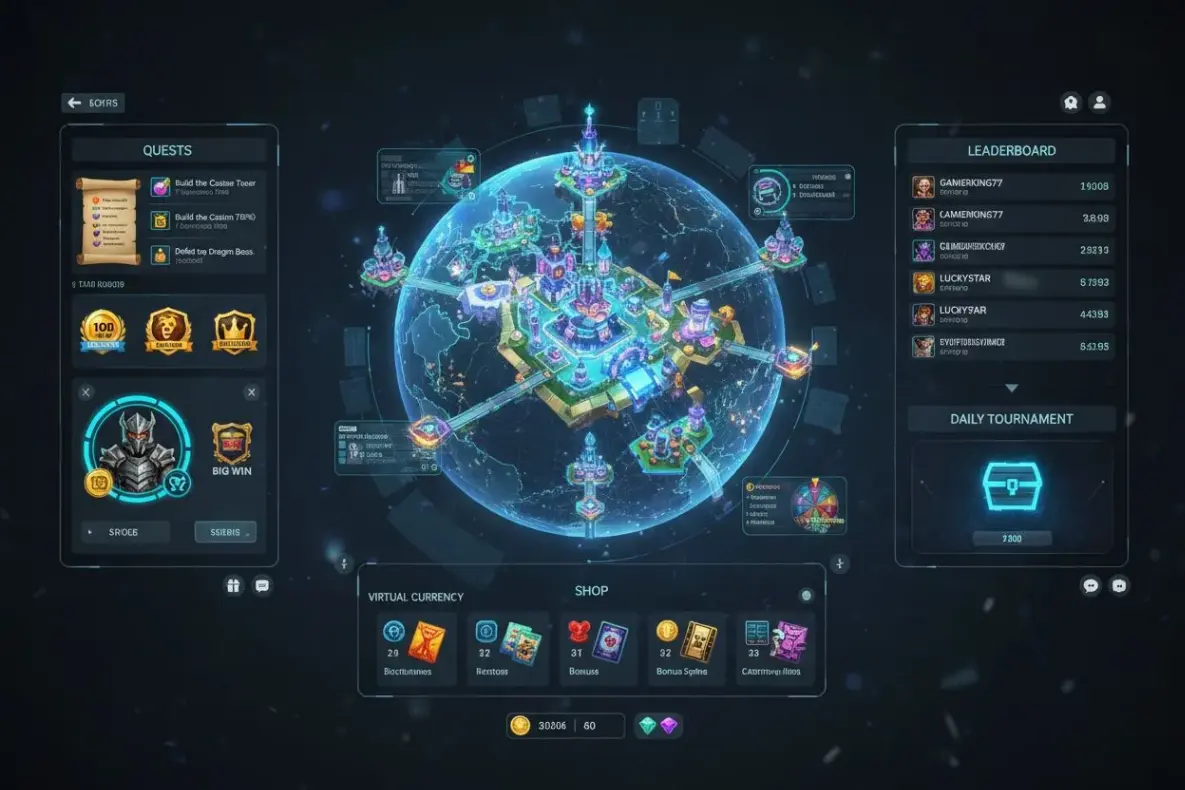
Gamification is now one of the most effective tools in shaping player behavior within online casinos. Through elements like quests, progress bars, level-ups, and personalized rewards, platforms guide users through a structured journey that feels both purposeful and entertaining. Instead of presenting games as isolated experiences, gamified interfaces connect activities into a unified progression system. This increases perceived value because every interaction, even small ones, contributes to visible advancement. Such systems rely heavily on optimized UX design: clean layouts, clear communication, and responsive feedback loops. The psychological foundation behind this approach harnesses intrinsic motivators such as curiosity, achievement, and mastery.
To illustrate how these mechanics integrate into user behavior, it is important to consider the specific interactive elements that contribute most to sustained engagement. Before discussing them in detail, the following list summarizes several essential gamification components commonly used in contemporary online casino environments:
- Experience-based progression systems, including levels, badges, and missions that encourage continuous play.
- Reward loops such as daily bonuses, achievements, and milestone prizes tied to gameplay frequency.
- Social interaction features like leaderboards, tournaments, and team challenges that foster community engagement.
These elements enhance retention because they transform what could be a solitary gambling interaction into a structured, rewarding digital journey. After implementing them strategically, casino operators gain access to both higher engagement rates and more accurate data on user behavior. This, in turn, supports better personalization at scale, helping platforms refine the interface and react to player preferences with greater precision.
Interface Design and Personalization Technologies
As online casinos evolve, interface design increasingly relies on data-driven personalization. This strategy allows each user to experience a tailored environment rather than a generic UI. AI-powered recommendation engines analyze gameplay habits, preferred genres, spending behavior, and session duration to optimize the presentation of games and rewards. For example, a player who frequently engages with strategy-based table games might see customized missions or recommendations aligned with those interests. This approach not only increases participation but also reduces friction, as players reach relevant content faster.
A key part of personalization lies in the interface’s adaptability. Responsive design ensures consistency across platforms, from desktop monitors to mobile devices. The user journey must remain seamless regardless of screen size. Gamified apps often outperform web-based platforms because native applications allow deeper integration of animations, achievement systems, and real-time notifications. These features create more emotional touchpoints throughout the experience. To compare different personalization methods and their strategic impact on retention, the table below highlights how specific technologies function within modern online casino ecosystems.
Comparison of Personalization Features in Online Casino UX
| Feature Type | Function in UX | Impact on Retention |
|---|---|---|
| AI Game Recommendations | Suggests tailored content based on player history | Higher relevance increases session length |
| Dynamic Reward Systems | Adjusts bonuses and missions to player behavior | Builds long-term motivation and loyalty |
| Interface Adaptation | Adjusts layout based on device and preferences | Ensures seamless usability across platforms |
Understanding these distinctions helps operators prioritize which technologies to implement first. As competition grows, personalization becomes less of a luxury and more of an expectation. Players gravitate toward platforms where the interface adapts to their needs rather than requiring them to adapt to the interface.
The Psychology Behind Engagement and Retention
Successful gamified interfaces apply principles from behavioral psychology. Concepts such as variable rewards, positive reinforcement, and incremental progression are central to motivating users to return. Online casinos increasingly implement subtle feedback mechanisms—visual effects, sound cues, and immediate acknowledgment of achievements—to create micro-moments of satisfaction. These cues strengthen emotional engagement and make gameplay feel more rewarding, even in non-winning scenarios.
Emotionally intelligent design also reduces cognitive load. Interfaces that provide clear navigation, intuitive categorization, and minimal friction help players feel in control. When users spend less time searching and more time engaging, retention naturally increases. Additionally, the transparency of progress indicators—such as meters showing proximity to the next reward—creates anticipation. Anticipation is one of the strongest psychological drivers of repeated behavior, and gamification leverages it to powerful effect.
Social features significantly magnify these psychological mechanisms. Even individual players enjoy seeing their progress in comparison to others when leaderboards or tournament results are visible. Competitive motivation encourages sustained involvement and increases emotional connection to the platform. When combined with personalized incentives, these strategies create a sophisticated retention model grounded in human behavior.
Future Trends in Gamified Casino Interfaces
The future of online casino UX will be shaped by adaptive systems, immersive technologies, and enhanced interactivity. Artificial intelligence will continue to refine personalization; machine learning models will deliver rewards with greater precision, matching missions and bonuses to each player’s emotional and behavioral profile. Virtual and augmented reality interfaces could soon allow gamblers to explore 3D environments, transforming the casino into a fully interactive digital world. Such innovations merge entertainment with gambling in unprecedented ways.
Another major trend is the integration of social ecosystems directly into the interface. Community hubs, cooperative missions, and real-time multiplayer challenges transform the experience into something more akin to online gaming than traditional gambling. These features support long-term loyalty by increasing the sense of belonging. As retention becomes the primary competitive metric, casinos will prioritize features that strengthen emotional investment.
Regulatory considerations will also influence future interface designs. As governments tighten rules around responsible gambling, online casinos must integrate transparent tracking systems, cooldown timers, and risk alerts. Paradoxically, responsible gambling tools can increase trust and thereby increase retention. Clear communication, accessible controls, and psychological safeguards are becoming essential components of user-centered design. With advancing technology, online casinos can maintain both regulatory compliance and deep user engagement through well-crafted gamification strategies.
Conclusion
Gamification has fundamentally reshaped the landscape of online casino interfaces. By merging interactive design, psychological motivators, and personalized experiences, operators can significantly enhance engagement and retention. The most successful platforms combine intuitive UX, adaptive reward systems, and community-driven features to create immersive environments that appeal to both novice and experienced players. As technology evolves, gamification will continue to influence how players interact with digital casinos, setting new standards for user experience across the iGaming industry.