
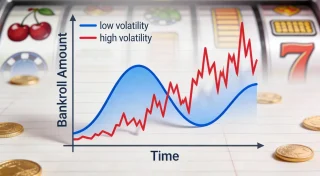
Slot machines are often perceived as simple games of chance where outcomes depend purely on luck. While randomness is indeed a core element, there is a crucial mathematical factor that significantly influences how your money behaves over time: slot volatility. Many players focus on bonuses, themes, or jackpot sizes, but volatility quietly determines whether your bankroll lasts for hours or disappears in minutes.
Understanding how slot volatility affects your bankroll over time is essential for anyone who wants to play responsibly, manage risk, and make informed decisions. This article explores what slot volatility really means, how it shapes bankroll dynamics, and why choosing the wrong volatility level for your budget can lead to frustration instead of entertainment.
What slot volatility actually means
Slot volatility, sometimes referred to as variance, describes how a slot game distributes its payouts over time. It does not change the overall return to player (RTP), but it strongly affects when and how often wins occur.
Low-volatility slots tend to produce frequent small wins. High-volatility slots pay less often, but when they do, the wins are usually much larger. Medium-volatility games fall somewhere in between, balancing payout frequency and size.
This difference is critical because two slots with the same RTP can behave very differently in practice. One may keep your bankroll relatively stable, while the other exposes it to sharp swings.
Why volatility matters more than RTP in short sessions
RTP represents the theoretical long-term return of a slot, usually calculated over millions or billions of spins. Most players never reach anything close to that number. Instead, real sessions are short-term experiences, where volatility plays a much bigger role than RTP.
In short sessions, volatility determines:
- how quickly your balance fluctuates,
- how long your bankroll can sustain play,
- how intense the emotional highs and lows become.
A high-volatility slot with a decent RTP can still drain a bankroll quickly if big wins do not arrive early. Conversely, a low-volatility slot may provide steady play even with a slightly lower RTP.
How low-volatility slots affect your bankroll
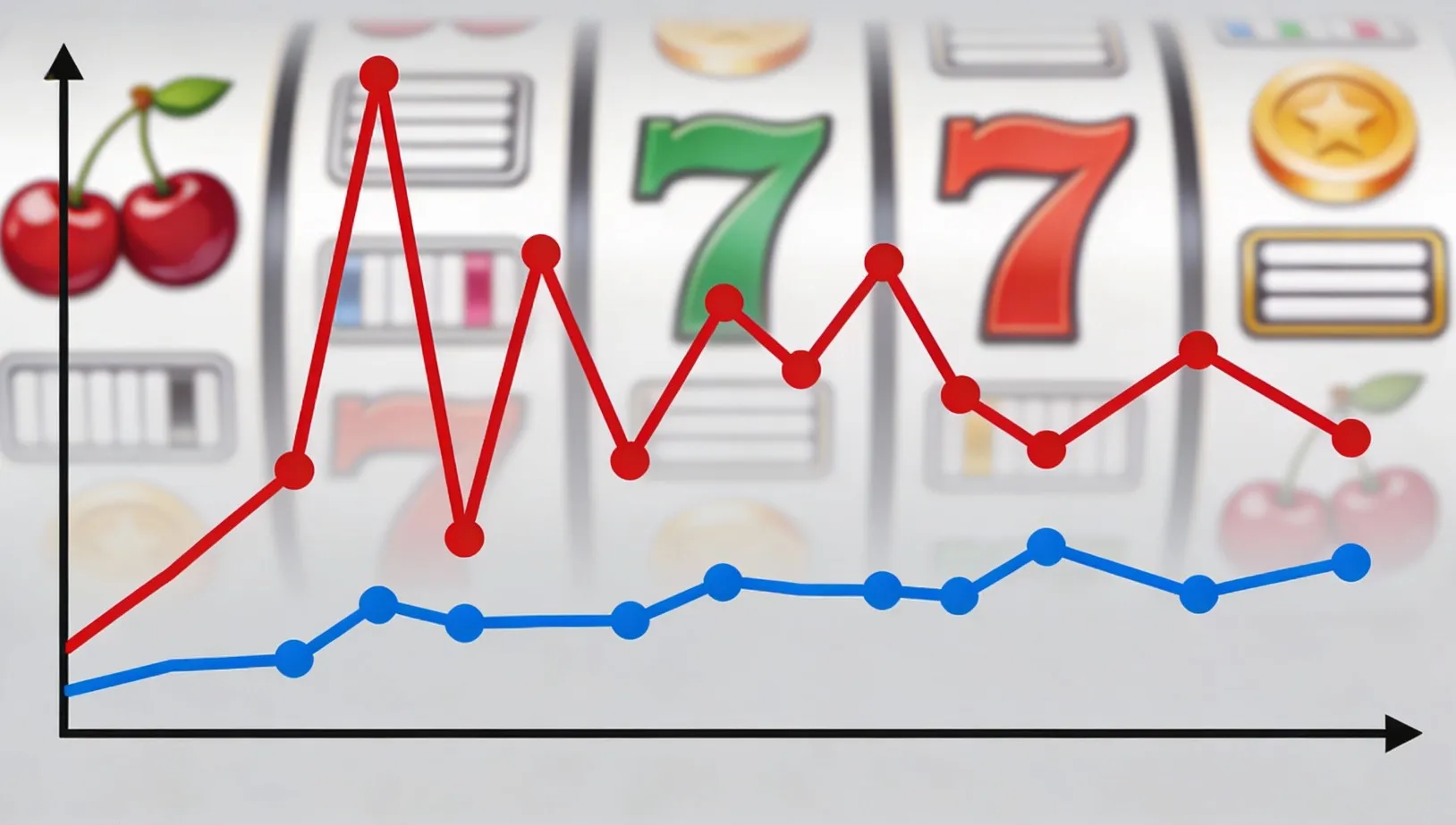
Low-volatility slots are designed to keep players engaged for longer periods. They offer frequent payouts, often returning small portions of your bet.
From a bankroll perspective, this means your balance tends to decline slowly rather than sharply. Losses are spread out over time, giving players more spins and more perceived control.
Low-volatility slots are commonly preferred by:
- casual players,
- beginners,
- players with small bankrolls,
- those seeking longer sessions rather than big wins.
However, the downside is that these games rarely deliver large payouts. Even long sessions may result in only modest profits, if any.
How high-volatility slots impact bankroll stability
High-volatility slots are built around the idea of rare but substantial wins. These games often feature bonus rounds, multipliers, and jackpots that can dramatically exceed the base bet.
From a bankroll perspective, this creates a very different experience. Long losing streaks are common, and your balance can drop rapidly before a major win appears.
High-volatility slots typically suit players who:
- have larger bankrolls,
- can tolerate long dry spells,
- are chasing big wins rather than session length,
- understand the risks involved.
Without sufficient bankroll management, these slots can feel punishing and unpredictable, even though they follow the same mathematical principles as lower-volatility games.
Medium volatility as a compromise option
Medium-volatility slots attempt to balance risk and reward. They usually provide a mix of smaller wins and occasional larger payouts, creating a more varied gameplay experience.
For many players, medium volatility offers a practical compromise. Bankroll fluctuations are noticeable but not extreme, and sessions can remain engaging without feeling either monotonous or overly aggressive.
These games are often chosen by players who want:
- reasonable session length,
- a chance at meaningful wins,
- less extreme swings compared to high volatility.
Volatility levels and bankroll behavior
| Volatility Level | Win Frequency | Win Size | Bankroll Behavior |
|---|---|---|---|
| Low | High | Small | Slow, steady decline |
| Medium | Moderate | Moderate | Balanced fluctuations |
| High | Low | Large | Sharp swings and risk |
This table highlights how volatility directly shapes the way your bankroll evolves during play.
The psychological effect of volatility on players
Volatility does not only affect numbers; it strongly influences player psychology. Frequent small wins can create a sense of momentum and control, even if the bankroll is slowly decreasing. Rare large wins can trigger excitement and emotional spikes, followed by frustration during long losing stretches.
High volatility often leads to emotional decision-making, such as increasing bet sizes to chase losses or staying longer than planned in anticipation of a big hit. Low volatility, on the other hand, can encourage extended play sessions, sometimes masking long-term losses.
Understanding these psychological effects helps players recognize when volatility is shaping behavior rather than entertainment.
How bankroll size should influence volatility choice
Your bankroll size should be a primary factor when choosing a slot. A small bankroll paired with high volatility is one of the most common mistakes players make.
A practical approach is to match volatility with bankroll capacity:
- small bankrolls pair best with low volatility,
- medium bankrolls can support medium volatility,
- large bankrolls are more suitable for high volatility.
This alignment helps ensure that variance does not overwhelm your balance before the game’s payout structure has time to unfold.
Volatility and betting strategy
Bet size and volatility are closely connected. High-volatility slots amplify the impact of each bet, meaning aggressive staking increases risk exponentially. Even a short run of losing spins can eliminate a bankroll if bet sizes are too large.
Lower-volatility games are more forgiving of slightly higher relative bets, but they still require discipline. Regardless of volatility, consistent bet sizing and predefined session limits are essential for bankroll preservation.
Long-term bankroll trends versus short-term outcomes
Over very long periods, volatility smooths out, and results align more closely with RTP. In reality, most players experience only short-term outcomes. This is where volatility dominates.
High volatility increases the gap between short-term results and long-term expectations. Low volatility narrows that gap, making outcomes more predictable over shorter sessions.
Recognizing this difference helps players set realistic expectations and avoid misinterpreting variance as “bad luck” or “hot streaks.”
Common misconceptions about slot volatility
Many players misunderstand volatility, assuming it directly affects how “fair” a game is. In truth, volatility does not change fairness; it changes distribution.
Some common misconceptions include:
- high volatility means higher RTP,
- low volatility guarantees profit,
- volatility can be overcome by strategy.
Slots remain games of chance regardless of volatility. The difference lies in how risk is expressed, not in whether the game favors the player.
Conclusion
Slot volatility is one of the most important factors influencing how your bankroll behaves over time. While RTP determines theoretical return, volatility shapes real-world experience: session length, emotional intensity, and risk exposure.
Choosing the right volatility level based on bankroll size, personal tolerance, and playing goals can dramatically improve both enjoyment and sustainability. Low volatility favors longer sessions and stability, while high volatility offers excitement and potential for large wins at the cost of higher risk.
Understanding volatility does not change the odds, but it empowers players to make smarter choices and approach slot play with realistic expectations.